Troubleshooting EDF Jets for Hobbyists: Ducted Fans, Power-to-Weight, Foam Reinforcement and Safe Launching.
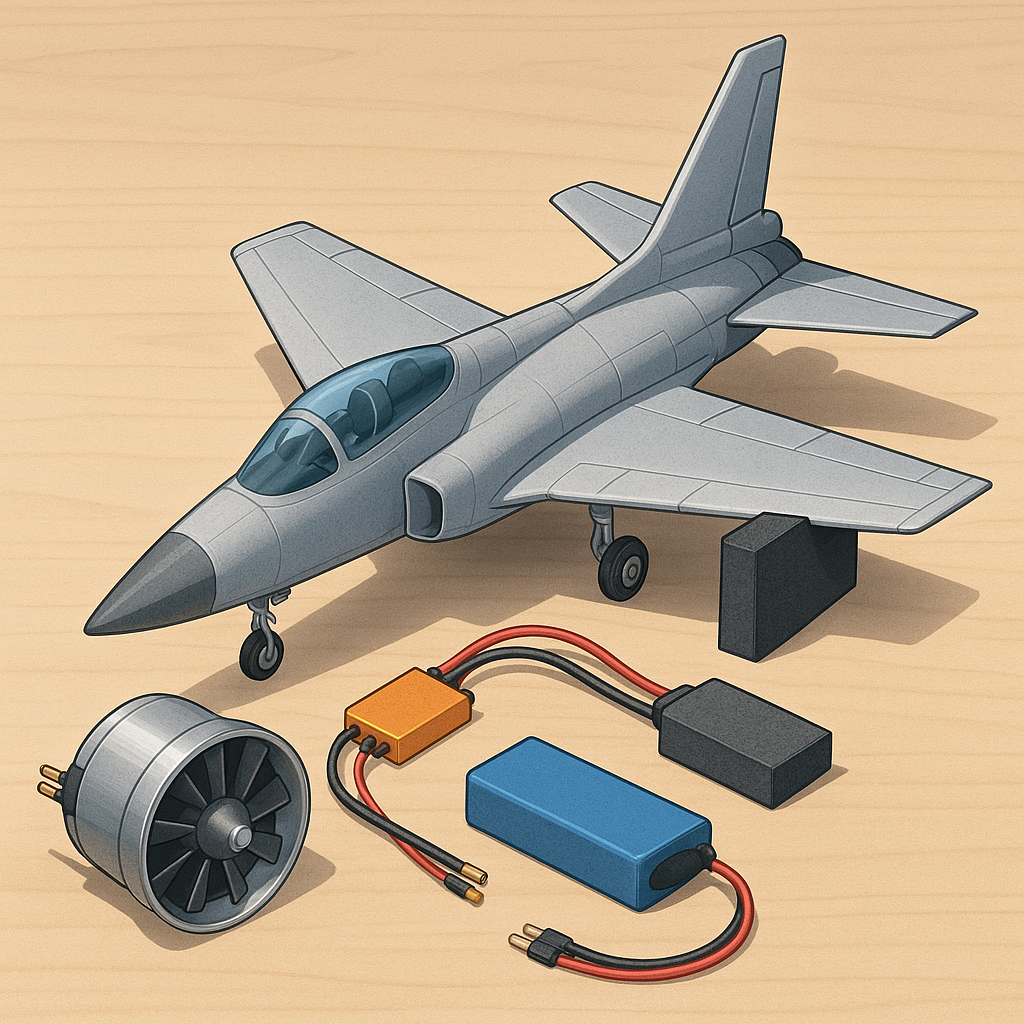
Troubleshooting EDF Jets for Hobbyists: Ducted Fans, Power-to-Weight, Foam Reinforcement and Safe Launching.
Electric ducted fan jets are rewarding but demanding models that combine high-speed handling with compact power systems, and this guide focuses on practical troubleshooting for common faults and failures.
Start with the ducted fan itself, because most EDF problems originate in the fan, duct or intake geometry, and a careful inspection will often reveal the issue.
Check for blade damage, imbalance and foreign objects in the intake or diffuser, as even small nicks dramatically reduce efficiency and raise current draw, and clean or replace the fan if you find blade erosion or impact marks.
Examine the duct for dents, out-of-round sections and loose lip seals, because a squashed or misaligned duct destroys static pressure and causes surging, and use a mandrel or a tube to check concentricity while turning the fan slowly by hand.
Power-to-weight is the decisive factor for EDF jets and symptoms of being underpowered include sluggish acceleration, high throttle needed for maintainable speeds and excessive ESC heating, and you should aim for a thrust-to-weight ratio comfortably above 1:1 for sport jets and nearer 1.5:1 for more demanding manoeuvres.
Measure thrust, record peak and continuous current draw and compare the data with manufacturer thrust curves, and if thrust is low you can look at a higher-power fan/motor combination, higher cell count battery while respecting ESC limits, or trimming excess weight by relocating batteries or using lighter fittings.
Foam airframes need intelligent reinforcement because point loads from the motor mount, fan supports and undercarriage will fail the foam before the structure otherwise gives useful feedback, and common reinforcement methods include glass cloth with epoxy, thin ply motor bulkheads and carbon-fibre strips laminated into tension lines.
Keep reinforcement minimal in mass but targeted in position, use foam-safe adhesives and fillets to spread loads, and consider removable motor pods where possible to simplify repairs and allow separate testing of the powerplant.
Safe launching of EDF jets reduces both risk to people and damage to the model, and a pre-flight checklist should include control throws and rates, battery health and voltage under load, failsafe set-up, and a dry ground spin of the fan at low throttle to confirm bearing and balance behaviour.
When hand-launching, always set a gentle throttle ramp with the transmitter cut to a pre-arm or idle start and use a helper for a flat, level toss into the airflow, and if you must launch from grass consider a dolly or trolley to prevent immediate prop strikes and to keep the fan ingestion clear of loose debris.
Common faults and quick fixes are usefully summarised in the checklist below for rapid diagnosis and action, and this list will help you prioritise checks before taking the model out for another flight.
- High current draw with low RPM: check for jammed bearings, blade delamination or orbital duct rubbing, and replace bearings or fan as required.
- Pop and surge under throttle: inspect intake ducts for crush or leaks and verify motor timing and ESC firmware settings.
- Poor climb or slow acceleration: confirm thrust-to-weight ratio, battery internal resistance and cell sag under load, and upgrade cells or reduce weight if necessary.
- Airframe flex or cracked foam: add carbon strips or glass cloth in tension and compression areas and re-anchor motor mounts to bulkheads.
- Unreliable launches: practice a controlled launch procedure, test failsafe, and consider a simple launch rail or trolley for repeatable initial conditions.
For detailed build notes, templates and some example repairs you can consult my project pages at WatDaFeck for further photos and parts lists that illustrate the techniques described here.
Follow me on: Facebook: https://www.facebook.com/watdafeck3d · Instagram: https://www.instagram.com/watdafeck3d/.
Comments
Post a Comment